






The creative landscape is constantly evolving. From bold typography to immersive 3D experiences, we break down the design trends that forward-thinking agencies are embracing to capture attention and drive results in 2025.
Discover how self-sealing tire technology works, how it can help reduce puncture-related downtime, and why it represents a new opportunity for tire service businesses and fleet operators.
What Are Self-Sealing Tires?
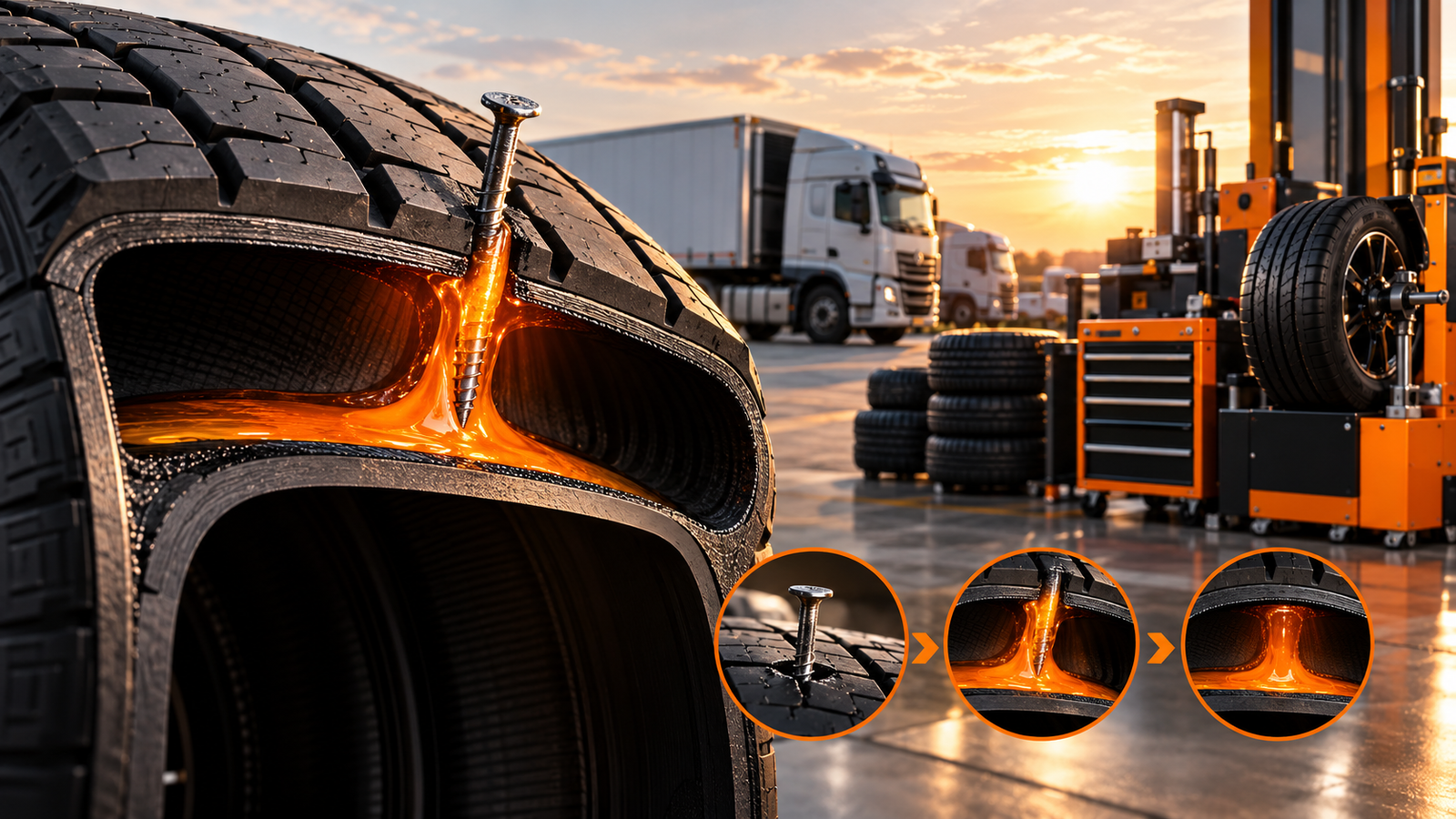
Self-sealing tires are designed to help prevent certain tread punctures from causing air loss. They use a specialized sealing compound applied to the inner surface of the tire, allowing the material to seal qualifying punctures when they occur.
Unlike conventional tires that may require immediate inspection and repair after a nail or screw penetrates the tread, properly treated self-sealing tires can offer an additional layer of puncture protection.
For drivers, this technology can mean greater peace of mind. For commercial fleets and tire service businesses, it presents an opportunity to explore new ways to improve reliability and reduce disruption caused by qualifying punctures.
How Does Self-Sealing Tire Technology Work?
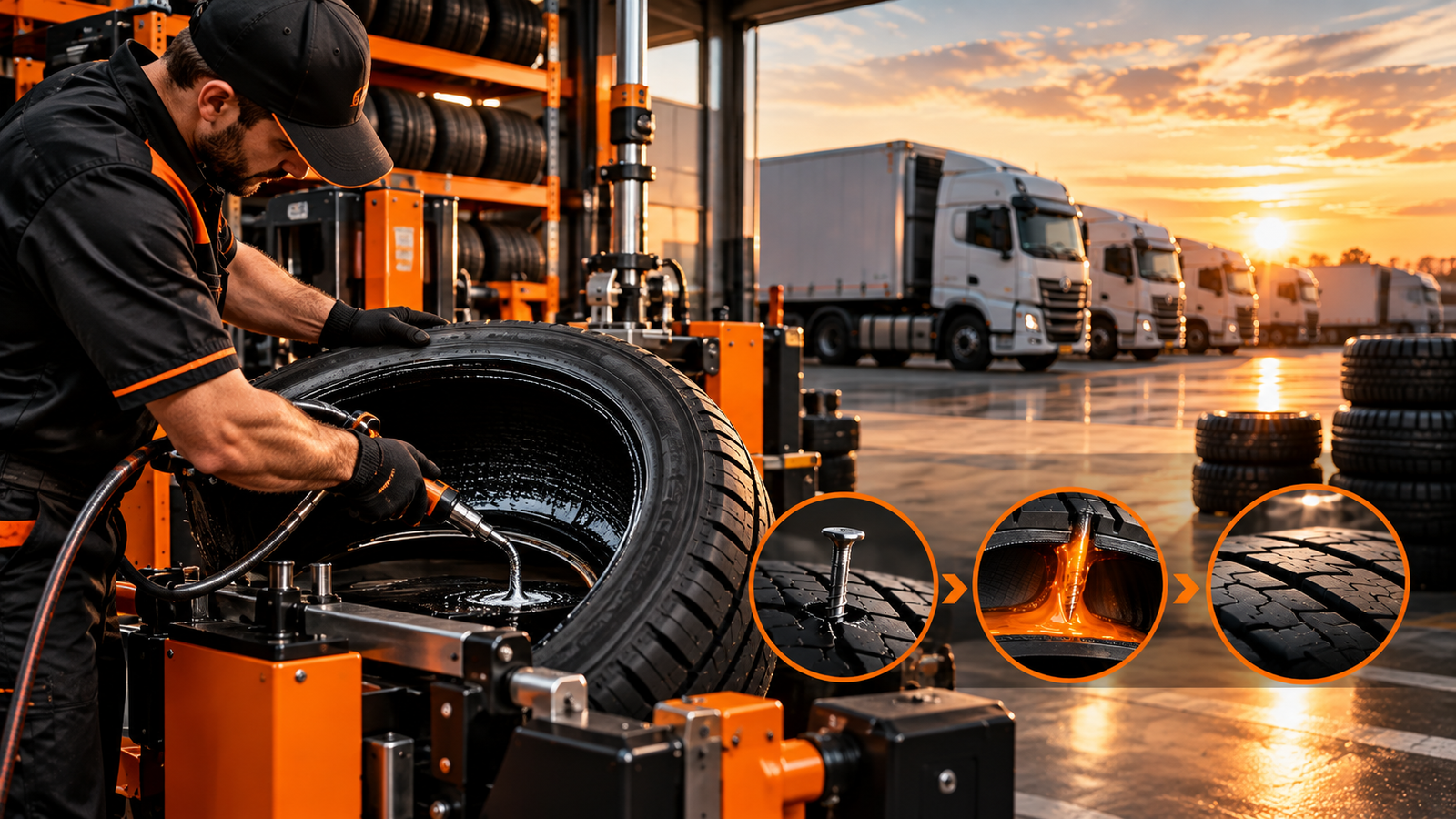
The process involves preparing the tire's inner surface and applying a specialized sealing compound using dedicated equipment.
While the exact process depends on the equipment and compound being used, a typical treatment workflow includes four main stages.
1. Tire Cleaning and Preparation
The tire's inner surface is cleaned to remove contaminants and prepare it for treatment. Proper preparation helps ensure that the sealing compound can adhere as intended.
2. Preheating
Where required by the treatment system, the tire is brought to the appropriate temperature before application. Temperature settings should follow the equipment manufacturer's specifications.
3. Sealing Compound Application
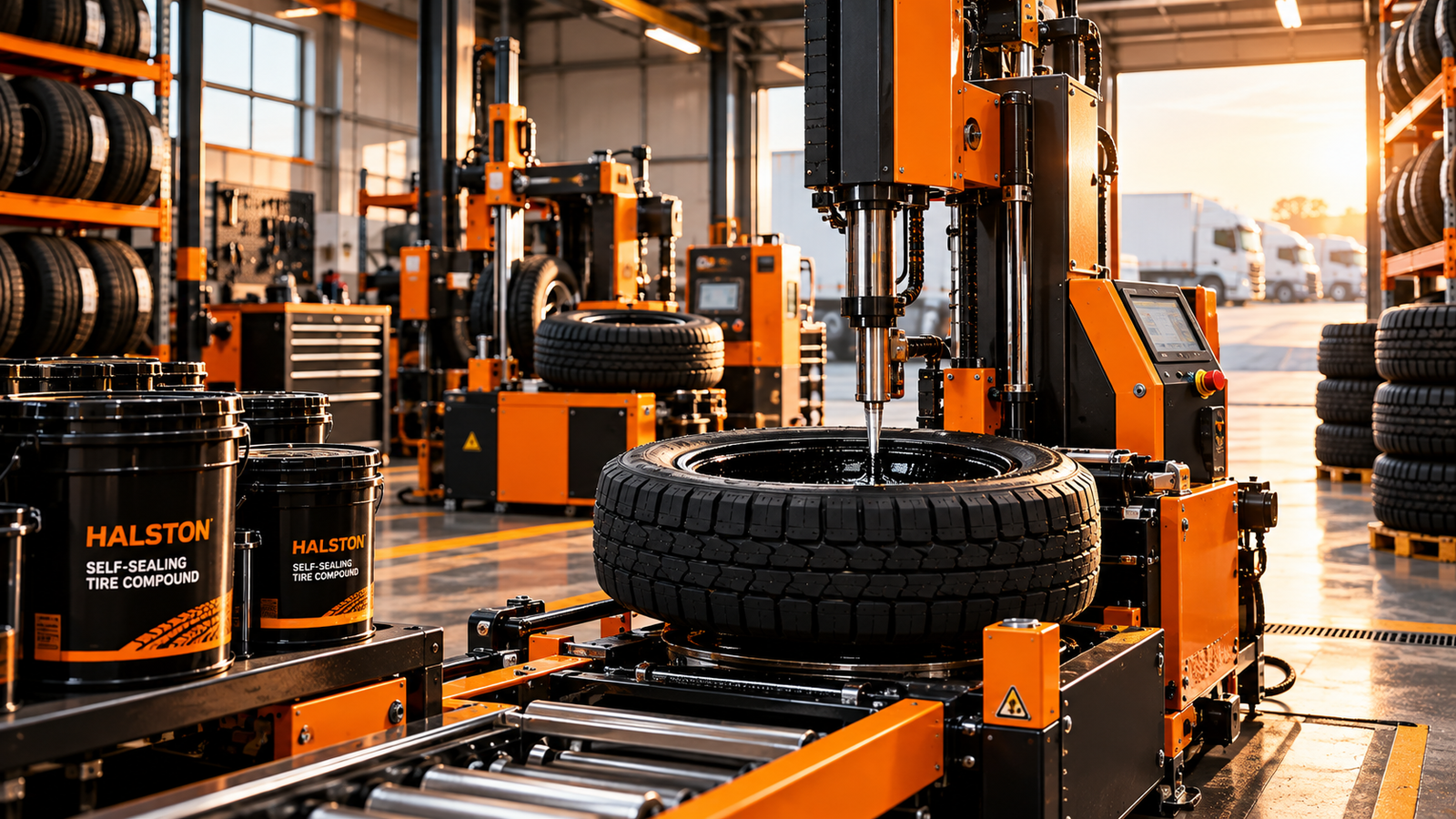
Specialized machinery applies the self-sealing compound to the designated area inside the tire. The application must be consistent and follow the product's technical requirements.
4. Cooling and Inspection
The treated tire is allowed to cool or stabilize as required. The operator then checks the finished application and follows the recommended quality-control procedures.
The result is a treated tire designed to help seal qualifying tread punctures under the conditions specified by the manufacturer.
Why Tire Protection Matters for Commercial Fleets
For trucking companies, delivery operators, and commercial vehicle fleets, tire-related interruptions can affect schedules, operating costs, and vehicle availability.
A puncture may lead to an unscheduled stop, a service call, a delayed delivery, or additional maintenance work.
Self-sealing tire technology can provide an additional layer of protection against qualifying tread punctures. Depending on the application and operating conditions, this may help businesses reduce certain puncture-related interruptions.
Fleet operators should evaluate the technology based on their tire types, routes, operating conditions, treatment costs, and maintenance requirements.
A New Service Opportunity for Tire Shops
Independent tire shops and service centers already have the facilities, equipment, and customer relationships needed to introduce additional tire services.
Self-sealing tire treatment can create an opportunity to offer customers a specialized protection service beyond conventional tire sales, installation, and repair.
Potential business benefits include:
- Introducing a differentiated tire protection service.
- Creating an additional source of service revenue.
- Offering more value to existing customers.
- Building relationships with commercial fleets and vehicle operators.
- Developing a specialized position in the local tire market.
The actual commercial opportunity depends on customer demand, local competition, treatment costs, pricing, and the quality of service delivery.
Equipment: Building a Complete Tire Treatment Operation
Introducing a self-sealing tire service requires more than purchasing a single machine. Businesses should understand the full treatment workflow and the equipment and consumables needed to operate it.
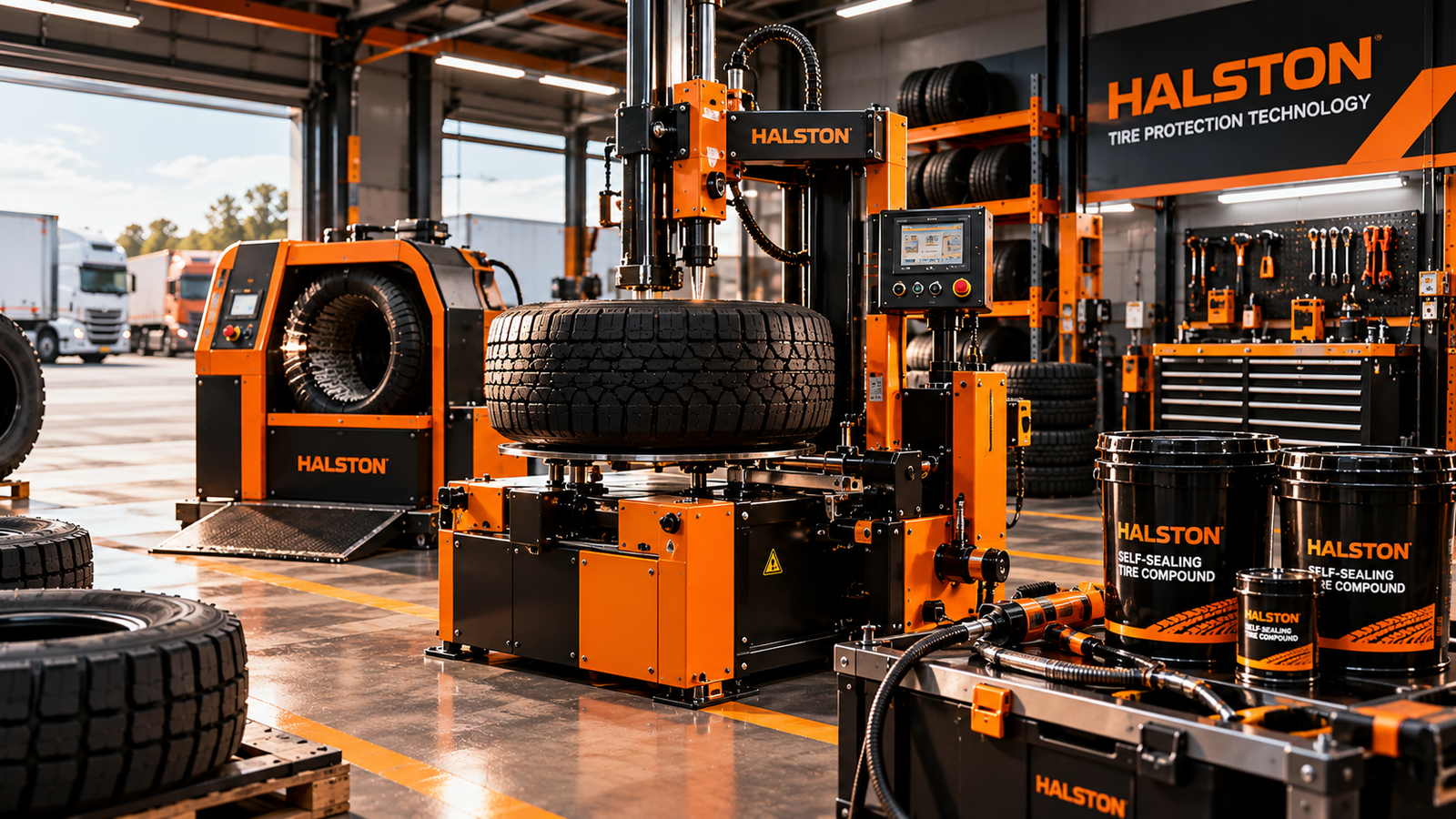
Depending on the package, a complete setup may include:
- A tire cleaning machine.
- A self-sealing compound application machine.
- A starting supply of self-sealing compound.
- Spare parts and consumables.
- Operator training and technical documentation.
- Equipment warranty and technical support.
Halston provides equipment packages intended to help tire businesses establish a tire protection operation. Prospective buyers should review the available specifications, installation requirements, included consumables, warranty terms, and training arrangements before making a purchase.
Self-Sealing Compound vs. Traditional Tire Sealants
Not all tire protection products work in the same way.
Some conventional tire sealants are introduced into an assembled tire through the valve or another specified method. Professional self-sealing tire treatment systems may instead apply a dedicated compound to the tire's inner surface using specialized machinery.
The differences can include the application method, compound formulation, compatibility requirements, treatment workflow, and intended use.
Before choosing a solution, businesses should compare verified product specifications, supported tire types, performance test results, maintenance requirements, and manufacturer recommendations.
What Are the Limitations of Self-Sealing Tires?
Self-sealing technology should not be confused with complete puncture-proof protection.
Performance depends on the compound, the tire construction, the location and size of the puncture, and the conditions under which the tire is used.
In particular:
- Sidewall cuts and damage are not necessarily protected.
- Large punctures may exceed the system's sealing capabilities.
- Structural damage still requires professional assessment.
- Compatibility with the tire and vehicle must be verified.
- Treated tires should be inspected according to the manufacturer's instructions.
Self-sealing treatment is an additional protection measure, not a replacement for proper tire maintenance, pressure checks, inspections, or professional repairs.
Is Self-Sealing Tire Technology a Good Business Opportunity?
For tire shops, distributors, fleet operators, and entrepreneurs, the opportunity should be assessed using realistic business assumptions.
Before investing, consider the following factors:
- Initial investment: Calculate the complete cost of the equipment package, installation, training, and initial consumables.
- Treatment cost: Determine the compound, labor, energy, and maintenance costs per tire.
- Market demand: Research the number of potential customers in your target area.
- Pricing strategy: Establish a competitive service price that reflects the value delivered.
- Production capacity: Estimate how many tires your team can process per day.
- Return on investment: Calculate expected revenue, operating expenses, and the time needed to recover the initial investment.
A clear financial model helps determine whether the system fits your business objectives and local market conditions.
Discover the Halston Tire Protection System
Halston provides specialized machinery, self-sealing compound, training, and technical support for businesses interested in introducing tire protection services.
Whether you operate a tire shop, manage a commercial fleet, distribute automotive products, or are exploring a new business opportunity, understanding the process and the complete equipment package is the first step.
Request the Halston catalog to review available packages, technical specifications, included equipment, and pricing.
Ready to explore the opportunity?
Get the Catalog & Full Pricing and discover how a self-sealing tire treatment operation could fit your business.
Note: Product capabilities, puncture-sealing limits, equipment specifications, certifications, and commercial performance should be verified against current manufacturer documentation before purchase or use.